
It’s not always easy to stay focused on your bigger goals, especially while working on the smaller steps that get you there, but that’s where PACT Goals come in. This blog post explains what PACT means, how to use them, and examples of them in practice.
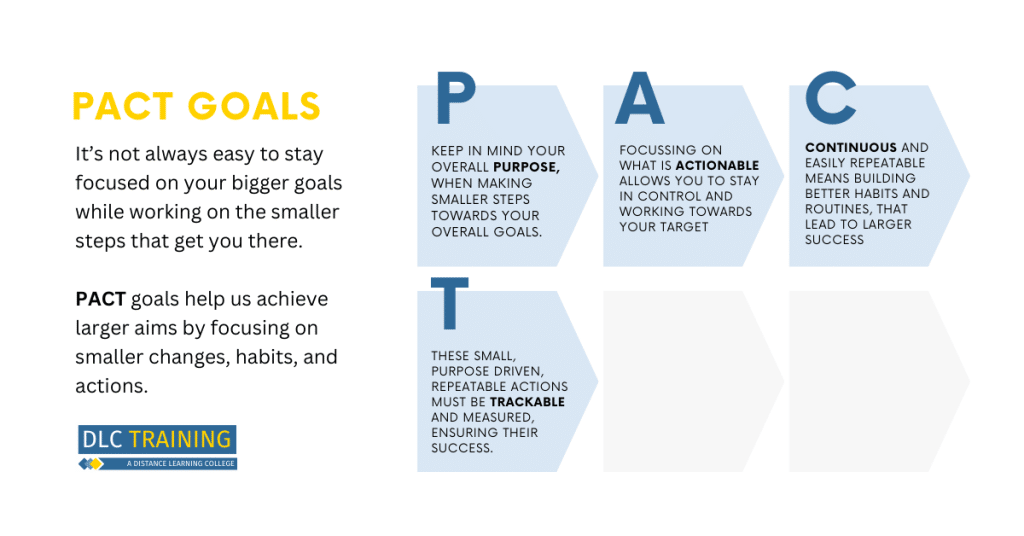
What are PACT Goals
Initially introduced as an alternative to SMART goals, PACT focuses on how you get to and achieve your goals, rather than the end results.
Purposeful
Actionable
Continuous
Trackable
The idea behind setting PACT goals puts more of an emphasis on habits, actions, and processes (the journey), rather than the eventual end goal (the destination).
P – Purposeful
When setting a PACT goal, we must keep in mind the overall purpose. More specifically, our aims and actions need to head in the direction of a deeper-held purpose or value, so that smaller steps can lead to bigger successes.
For example, rather than setting the goal of “losing weight”, the purpose would instead be to “improve your health”. Similarly, instead of “getting more done”, the purpose would be something like “being more productive”.
A – Actionable
Keeping your goals actionable ensures they are achievable. Staying focused on what is possible, what you can do and act on, allows you to stay in control.
In our examples, the small actionable tasks would be exercise or diet choices, and for productivity, it would be regular reviews, progress, and planning.
C – Continuous
With an increased focus on building habits and routines to achieve your goals, a key part of a PACT goal is that it is continuous. A simple, often small, repeatable action helps keep the purpose clear and ensure it remains actionable.
In our examples, the continuous element comes into play with regular, perhaps daily, exercise and healthier meals, and making sure you make progress as regularly and consistently as possible.
T – Trackable
The final part of a PACT goal is that it is trackable. In keeping with the previous steps, these small, purpose-driven, repeatable actions must be tracked and measured, ensuring their success.
There are plenty of ways to track diet, exercise, and progress; finding one and implementing it is key to completing a PACT goal.
Conclusion
Overall, PACT goals help us achieve larger goals by focusing on smaller changes, habits, and actions, and can provide a macro-scale perspective, helping each step in a larger journey. Take a look at our breakdown of SWOT Analysis and Smart Goals, and find more useful information and tools on our blog and resource pages.